



Services

Vestibular Therapy
Specialized Rehabilitation for Dizziness, Balance Disorders, and Vestibular Dysfunction
Dizziness, vertigo, and balance disturbances are among the most disorienting and functionally limiting conditions a person can experience. They affect the ability to perform basic daily activities, increase the risk of falls, and can significantly diminish quality of life. Despite their prevalence, vestibular disorders are frequently misunderstood and undertreated.
Vestibular physical therapy is a specialized area of rehabilitation focused on assessing and treating disorders of the vestibular system — the sensory system responsible for detecting motion, maintaining balance, and stabilizing vision during movement. When this system is disrupted, the resulting symptoms can be debilitating. With the appropriate clinical intervention, the majority of vestibular conditions respond well to targeted physical therapy.
What Is Vestibular Therapy?
The vestibular system comprises the inner ear structures and their neural connections to the brain and eyes. It works in coordination with the visual and somatosensory systems to maintain stable posture, gaze, and spatial orientation. When any component of this system is impaired — whether due to injury, disease, aging, or neurological changes — the result is often dizziness, vertigo, imbalance, or visual disturbance.
Vestibular physical therapy is a clinically specialized program of assessment and treatment designed to address these impairments directly. It is distinct from general balance training and requires advanced clinical training in vestibular anatomy, neurophysiology, and evidence-based rehabilitation techniques.
Treatment is guided by a thorough clinical evaluation that identifies the specific nature and source of vestibular dysfunction — whether peripheral (inner ear), central (brain and brainstem), or a combination of both. From this evaluation, a targeted treatment program is developed to address the underlying impairment and restore normal vestibular function.
Conditions We Treat
Our vestibular rehabilitation program addresses a wide range of diagnoses affecting the vestibular system and related balance mechanisms, including:
 Benign Paroxysmal Positional Vertigo (BPPV)
- Vestibular neuritis and labyrinthitis
- Unilateral and bilateral vestibular hypofunction
- Meniere's disease
- Persistent Postural-Perceptual Dizziness (PPPD)
- Cervicogenic dizziness
- Concussion and post-concussion vestibular dysfunction
- Central vestibular disorders
- Age-related balance decline and fall risk
- Post-surgical vestibular dysfunction
- Motion sensitivity and visually induced dizziness
- Vestibular migraine
If you have received a diagnosis not listed above or have been experiencing dizziness or balanced disturbances without a confirmed diagnosis, contact our office. A comprehensive vestibular evaluation can help identify the source of your symptoms and determine whether physical therapy is appropriate.
Goals of Vestibular Rehabilitation
The goals of vestibular therapy are determined by the nature of each patient's specific diagnosis and clinical presentation. In general, a comprehensive vestibular rehabilitation program is designed to achieve the following:
Elimination or Reduction of Vertigo and Dizziness
For conditions such as BPPV, specific repositioning maneuvers are highly effective at resolving vertigo rapidly. For other vestibular disorders, habituation and adaptation exercises progressively reduce dizziness intensity and frequency over the course of treatment.
Restoration of Gaze Stability
Vestibular dysfunction often impairs the vestibule-ocular reflex (VOR), the mechanism responsible for stabilizing vision during head movement. Gaze stabilization exercises retrain this reflex, reducing visual blurring and improving the ability to focus during activity.
Improvement of Postural Stability and Balance
Deficits in vestibular input directly compromise balance and postural control. Balance retraining exercises challenge the sensory and motor systems responsible for maintaining stability, reducing fall risk and improving functional confidence.
Reduction of Motion Sensitivity
Many patients with vestibular disorders develop heightened sensitivity to motion — whether self-generated or environmentally. Habituation exercises systematically expose patients to the movements and environments that provoke symptoms, progressively reducing sensitivity over time.
Functional Restoration
The goal of vestibular rehabilitation is to restore the ability to perform daily activities walking, driving, working, exercising, and navigating complex environments safely and without debilitating symptoms.
Fall Prevention
Vestibular dysfunction is a significant contributor to fall risk, particularly in older adults. Vestibular rehabilitation directly addresses the sensory and motor deficits that increase fall susceptibility, providing a meaningful reduction in fall risk over the course of treatment.
Our Treatment Approach
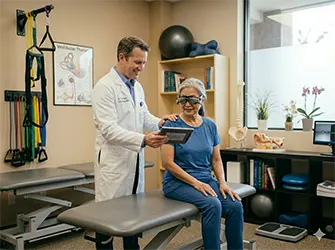
Every patient in our vestibular rehabilitation program begins with a comprehensive clinical evaluation. This includes detailed symptom history, assessment of eye movements and vestibule-ocular reflex function, positional testing, balance and gait assessment, and screening for central nervous system involvement. The findings of this evaluation determine the specific diagnosis and guide the individualized treatment plan.
Treatment may incorporate any combination of the following evidence-based interventions:
Canalith Repositioning Maneuvers
BPPV is caused by the displacement of calcium carbonate crystals — otoconia — within the semicircular canals of the inner ear. Canalith repositioning maneuvers, including the Epley maneuver, Semont maneuver, and canal-specific variants, are highly effective, non-invasive techniques that reposition displaced crystals and resolve positional vertigo, often within one to three treatment sessions.
Vestibular Adaptation Exercises
Adaptation exercises target the vestibule-ocular reflex by exposing the vestibular system to controlled progressively challenging head and eye movements. Over time, these exercises promote neuroplastic changes in the brainstem that restore accurate vestibular signal processing and reduce motion-provoked symptoms.
Habituation Exercises
For patients with motion sensitivity or dizziness provoked by specific movements or environments, habituation exercises involve systematic, repeated exposure to symptom-provoking stimuli. With consistent repetition, the central nervous system learns to suppress the abnormal response, reducing symptom intensity over time.
Gaze Stabilization Training
Gaze stabilization exercises are designed to improve the function of the VOR and the ability to maintain clear, stable vision during head movement. These exercises are essential for patients with vestibular hypofunction and are progressively advanced in difficulty as the patient's tolerance and function improve.
Balance and Gait Retraining
Balance retraining exercises challenge the vestibular, visual, and somatosensory systems under progressively demanding conditions including altered surfaces, reduced visual input, and dynamic movement tasks. Gait training addresses compensatory movement patterns and builds the dynamic balance required for safe, confident ambulation.
Cervicogenic Dizziness Treatment
When dizziness originates from dysfunction in the cervical spine rather than the inner ear, treatment addresses the underlying cervical impairments through manual therapy, joint mobilization, and targeted exercise to normalize cervical proprioceptive input and reduce dizziness.
Home Exercise Program
Vestibular rehabilitation is highly dependent on consistent practice between clinical sessions. Every patient receives an individualized home exercise program designed to reinforce and advance the gains made in therapy. Adherence to the home program is a critical determinant of treatment outcomes.
Who Should Seek Vestibular Therapy
Vestibular physical therapy is appropriate for adults experiencing any of the following symptoms or conditions:
- Recurrent or persistent dizziness or vertigo
- A sensation of spinning, tilting, swaying, or floating
- Dizziness provoked by specific head positions or movements
- Difficulty maintaining balance or a tendency to veer when walking
- Visual disturbance or difficulty focusing during head movement
- Dizziness or imbalance following a concussion or head injury
- A recent diagnosis of BPPV, vestibular neuritis, labyrinthitis, or a related vestibular condition
- Chronic dizziness that has not been resolved by medical management alone
- Increased fall risk or a history of unexplained falls
- Dizziness or imbalance associated with neck pain or cervical dysfunction
A referral from a physician, neurologist, otolaryngologist, or other specialist is helpful but may not be required depending on your insurance plan. Contact our office to determine the appropriate pathway for initiating care.
Frequently Asked Question (FAQ)
Vestibular dizziness is typically characterized by a sensation of spinning, swaying, or movement either of the self or the environment often provoked or worsened by head movement or changes in position. It may be accompanied by nausea, visual disturbance, or imbalance. However, dizziness can have multiple causes, including cardiovascular, neurological, and metabolic origins. A comprehensive vestibular evaluation by a trained physical therapist can help identify whether your symptoms are consistent with a vestibular disorder and whether physical therapy is the appropriate intervention.
Benign Paroxysmal Positional Vertigo is the most common vestibular disorder. It occurs when calcium carbonated crystals that normally reside in one part of the inner ear become displaced into the semicircular canals, causing brief but intense episodes of vertigo triggered by specific head movements — such as rolling over in bed, looking up, or bending forward. BPPV is treated with canalith repositioning maneuvers, which guide the displaced crystals back to their correct location. The Epley maneuver is the most widely used and is highly effective, with resolution of symptoms often achieved within one to three treatment sessions.
The number of sessions required depends on the specific diagnosis, severity of symptoms, duration of the condition, and the patient's overall health and response to treatment. BPPV often resolves in one to three sessions. Vestibular hypofunction, chronic dizziness, or post-concussion vestibular dysfunction typically requires a longer course of care, ranging from several weeks to several months. Your therapist will establish a realistic treatment timeline during your initial evaluation and reassess your progress regularly.
Some vestibular exercises particularly habituation and adaptation exercises are designed to temporarily provoke mild symptoms as part of the therapeutic process. This is expected and does not indicate that the condition is worsening. Symptom provocation during exercise promotes the neuroplastic adaptation that leads to long-term improvement. Your therapist will calibrate the intensity of your program to ensure that symptom provocation remains within a clinically appropriate and tolerable range.
Vestibular physical therapy can play an important supportive role in the management of Meniere's disease, particularly in addressing balance deficits, reducing motion sensitivity, and improving functional stability during periods between acute episodes. While physical therapy does not treat the underlying endolymphatic dysfunction associated with Meniere's disease, it is an effective component of a comprehensive management plan that may also include medical management and dietary modification. Your therapist will coordinate with your managing physician to ensure an integrated approach to your care.
Yes. Vestibular dysfunction is among the most common and persistent sequelae of concussion. Post-concussion vestibular symptoms including dizziness, imbalance, visual motion sensitivity, and gaze instability respond well to targeted vestibular rehabilitation when initiated at the appropriate stage of recovery. Your therapist will conduct a thorough evaluation to assess the nature and severity of your vestibular impairments and will develop a treatment plan consistent with current concussion rehabilitation guidelines.
Certain symptoms associated with dizziness or vertigo require immediate medical evaluation. Seek emergency care if your dizziness is accompanied by sudden severe headache, double vision, difficulty speaking or swallowing, facial numbness or weakness, loss of coordination, or numbness or weakness in the limbs. These symptoms may indicate a central nervous system event such as a stroke or transient ischemic attack that requires urgent medical intervention. Vestibular physical therapy is not appropriate as a first response to these presentations.