





Services
Orthopedic Rehabilitation
Comprehensive Physical Therapy for Musculoskeletal Injuries and Conditions
The musculoskeletal system comprising the bones, joints, muscles, tendons, ligaments, and connective tissues of the body is subject to a wide range of injuries, degenerative changes, and post-surgical demands that can significantly impair function and quality of life. Orthopedic physical therapy is the clinical discipline dedicated to the evaluation and treatment of these conditions through evidence-based, individualized rehabilitation.
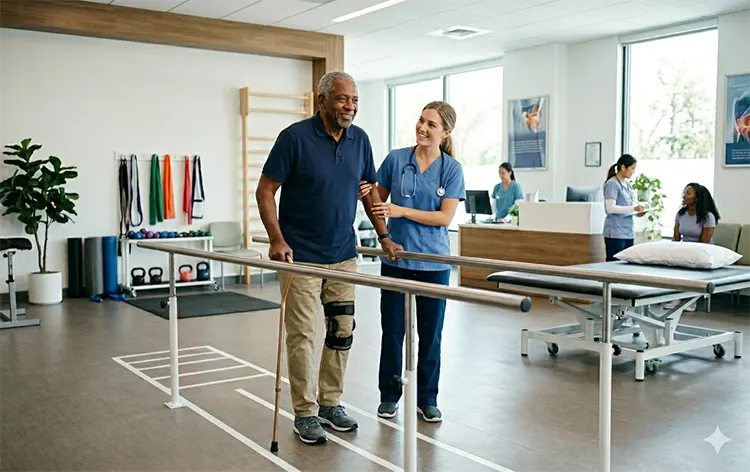
Our orthopedic rehabilitation program addresses the full spectrum of musculoskeletal conditions affecting the upper and lower extremities and spine. Whether you are recovering from an acute injury, managing a chronic condition, or rehabilitating following orthopedic surgery, our licensed physical therapists will develop a treatment plan tailored to your diagnosis, functional goals, and lifestyle.
Conditions We Treat
Our orthopedic rehabilitation program provides evaluation and treatment for a broad range of musculoskeletal diagnoses across all regions of the body.
Shoulder
 Rotator cuff tears and tendinopathy
- Shoulder impingement syndrome
- Adhesive capsulitis (frozen shoulder)
- Glenohumeral instability and labral pathology
- Acromioclavicular joint injuries
- Post-surgical rehabilitation following rotator cuff repair, shoulder replacement, and labral repair
Elbow, Wrist, and Hand
- Lateral and medial epicondylitis (tennis elbow and golfer's elbow)
- Carpal tunnel syndrome
- De Quervain's tenosynovitis
- Wrist sprains and fracture rehabilitation
- Trigger finger and finger tendon injuries
- Post-surgical rehabilitation of the hand and wrist
Hip and Pelvis
- Hip osteoarthritis
- Hip flexor, adductor, and gluteal tendinopathy
- Femoroacetabular impingement (FAI)
- Labral tears of the hip
- Greater trochanteric pain syndrome
- Sacroiliac joint dysfunction
- Post-surgical rehabilitation following hip replacement and hip arthroscopy
Knee
- Anterior cruciate ligament (ACL) injuries and reconstruction rehabilitation
- Meniscal tears and post-surgical rehabilitation
- Patellofemoral pain syndrome
- Patellar tendinopathy
- Knee osteoarthritis
- Iliotibial (IT) band syndrome
- Post-surgical rehabilitation following total knee replacement
Ankle and Foot
- Ankle sprains and chronic ankle instability
- Achilles tendinopathy and rupture rehabilitation
- Plantar fasciitis
- Stress fractures of the foot and ankle
- Peroneal tendon injuries
- Post-surgical rehabilitation of the foot and ankle
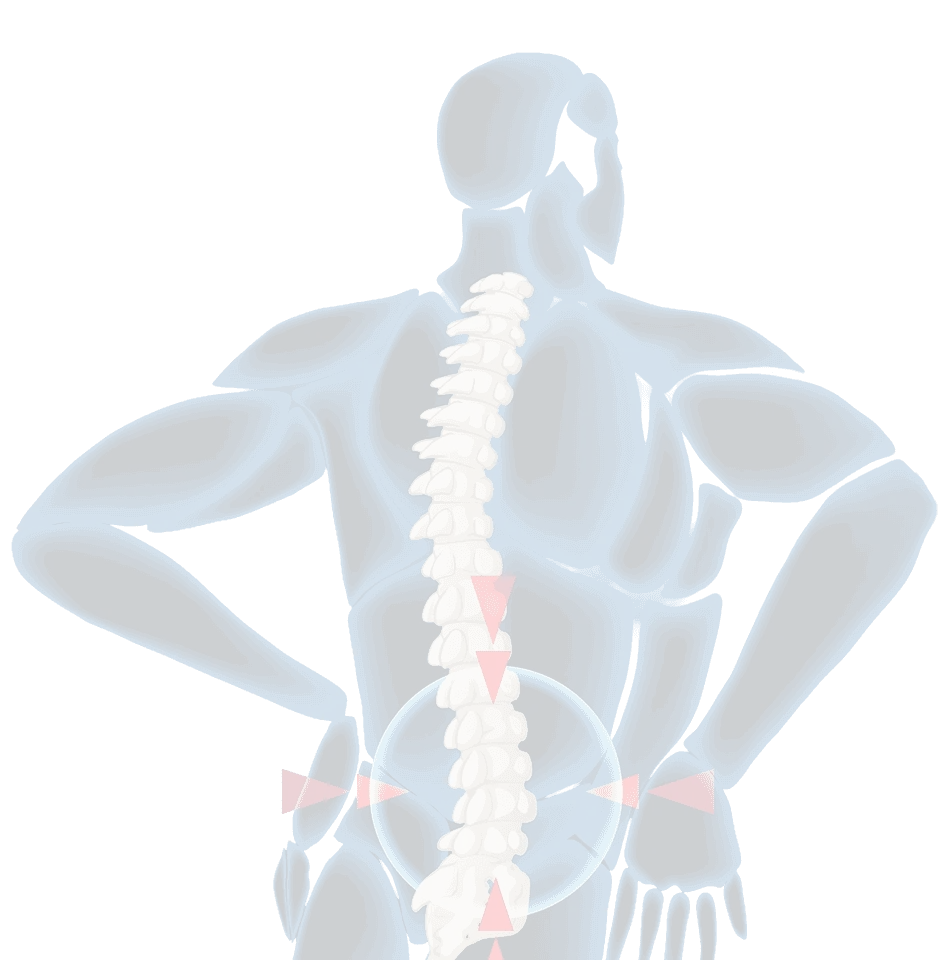
Spine
-
- Acute and chronic neck and low back pain
- Disc herniations and radiculopathy
- Degenerative disc and joint disease
- Spinal stenosis
- Post-surgical spine rehabilitation
If you have received a diagnosis not listed above, contact our office. Our therapists evaluate and treat a wide range of musculoskeletal conditions across all regions of the body.
Goals of Orthopedic Rehabilitation
Orthopedic rehabilitation is directed toward restoring the full range of physical function affected by injury, surgery, or degenerative disease. The specific goals of each patient's program are established during the initial evaluation and revised as the patient progresses through treatment.
Pain Reduction and Management
Reducing pain intensity and frequency is a primary early goal of orthopedic rehabilitation. Manual therapy, therapeutic exercise, and adjunctive modalities are used in combination to address the tissue-level and neurological contributors to pain, with the aim of improving comfort and reducing reliance on pain medication.
Restoration of Range of Motion and Flexibility
Joint stiffness, capsular tightness, and soft tissue restriction are common consequences of injury, surgery, and immobilization. Restoring full or functional range of motion is essential to normalizing movement patterns and preventing compensatory dysfunction in adjacent structures.
Strength and Neuromuscular Function
Muscle weakness and disrupted neuromuscular control are consistent findings in orthopedic conditions. Progressive strengthening and neuromuscular re-education restore the capacity of the musculature to support and protect joints, absorb loads, and generate the forces required for functional activity.
Functional Movement Restoration
Beyond isolated strength and mobility gains, orthopedic rehabilitation addresses the integrated movement patterns required for daily activities, occupational tasks, and recreational pursuits. Functional movement retraining ensures that clinical improvements translate directly into improved real-world performance.
Return to Sport or High-Level Activity
For patients whose goals include returning to athletic competition, physically demanding occupational roles, or high-level recreational activity, advanced rehabilitation phases incorporate sport-specific and task-specific training, progressive loading, and objective return-to-activity criteria to ensure safe and complete functional restoration.
Prevention of Re-Injury
Identifying and addressing the biomechanical, neuromuscular, and movement-related factors that contributed to the original injury is an essential component of orthopedic rehabilitation. Education, corrective exercise, and movement retraining reduce the risk of recurrence and support long-term musculoskeletal health.
Frequently Asked Question (FAQ)
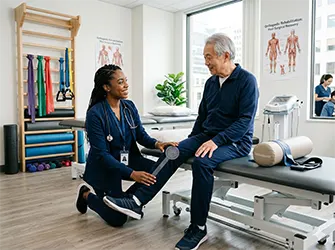
Orthopedic physical therapy is a clinical service delivered by a licensed physical therapist with advanced training in musculoskeletal evaluation, diagnosis, and treatment. Treatment is guided by a formal clinical assessment, directed at specific diagnosed impairments, and progressed according to established principles of tissue healing and neuromuscular rehabilitation. Personal training and general exercise programs, while valuable for health maintenance, are not designed to address the clinical complexity of orthopedic injuries, post-surgical recovery, or chronic musculoskeletal conditions.
In most states, patients can access physical therapy directly without a physician referral a provision known as direct access. However, insurance coverage requirements vary by plan, and some insurers require a referral for reimbursement. Our administrative team will verify your specific insurance requirements prior to your first appointment and advise you accordingly.
Treatment duration depends on the nature and severity of your condition, the stage of tissue healing, your overall health and activity level, and your adherence to your home exercise program. Acute soft tissue injuries may be resolved within four to eight weeks. Post-surgical rehabilitation and chronic or complex conditions typically require a longer course of care. Your therapist will establish a realistic timeline during your initial evaluation and reassess your progress at regular intervals throughout treatment.
Your first appointment is a comprehensive evaluation that typically lasts 45 to 60 minutes. Your therapist will review your medical history, discuss the nature and onset of your symptoms, and conduct a thorough physical examination — including assessment of posture, movement, joint mobility, strength, and functional capacity. Based on the findings of this evaluation, your therapist will establish a working diagnosis, explain the contributing factors to your condition, and outline an individualized treatment plan with specific goals and an estimated timeline.
Some degrees of temporary discomfort during treatment are not uncommon, particularly when addressing joint stiffness, soft tissue restrictions, or early post-surgical sensitivity. However, effective orthopedic rehabilitation should not be consistently or severely painful. Your therapist will monitor your response to each intervention and adjust the program to ensure that treatment remains within a clinically appropriate and tolerable range. Communication about your pain levels and comfort throughout the process is encouraged and essential to your care.
For many orthopedic conditions, a well-structured course of physical therapy can significantly reduce or eliminate symptoms and restore function without surgical intervention. Research supports conservative management as the first-line treatment for a wide range of musculoskeletal conditions, including rotator cuff tendinopathy, knee osteoarthritis, meniscal pathology, and lumbar disc disorders. If surgery is ultimately required, completing physical therapy beforehand will optimize your pre-operative condition and improve your post-surgical outcome. Your therapist will communicate with your orthopedic surgeon throughout your care to ensure a coordinated and informed approach.
The appropriate timing for initiating post-surgical physical therapy depends on the specific procedure performed and your surgeon's protocol. Some patients begin supervised therapy within days of surgery; others require a brief period of protected healing before active rehabilitation commences. We work directly with your surgical team to initiate rehabilitation at the appropriate time and to ensure that our treatment program is fully aligned with your surgeon's post-operative guidelines.
Yes. A progressive, individualized home exercise program is a standard component of every patient's plan of care. Your home program is designed to complement and reinforce your in-clinic treatment, and it will be updated regularly as your condition improves. Consistent adherence to your home program is one of the most significant factors influencing the speed and completeness of your recovery.